RV VIN Check: History, Title Brands, Recalls and Theft
Learn how to run an RV VIN check: find the VIN on a motorhome or trailer, read NMVTIS history reports, spot title brands, check recalls and theft records.
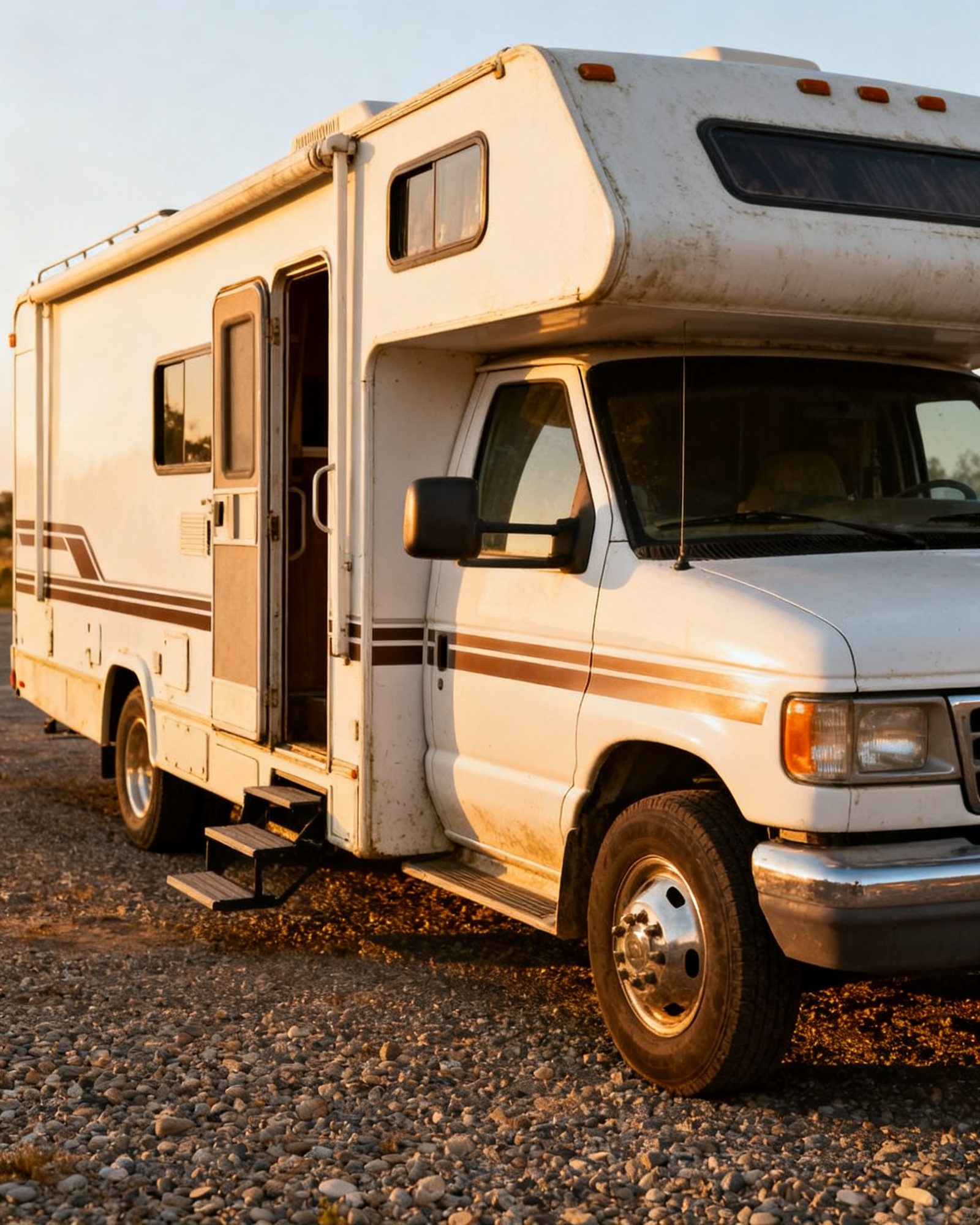
A VIN check is the first hard fact you can get about a used RV before you spend money on an inspection or a trip to see it. The 17-character vehicle identification number ties the RV to its title, its recall history and its theft and total-loss records. Run it before you look at the coach in person, and match it against the title and the federal certification label when you do. The check will not tell you whether the roof leaks or the transmission is tired, but it will tell you whether the RV is what the seller says it is.
What the 17-character VIN actually tells you
Since the 1981 model year, on-road vehicles sold in the US, trailers included, carry a 17-character VIN. The number is not random. It identifies the maker, the model year and the sequence of the vehicle, and it never uses the letters I, O or Q, so a VIN containing any of those is wrong. The 10th character gives the model year. A motorhome VIN decoder uses that structure to confirm the year the chassis was built, which is not always the year the living area was finished.
A camper VIN lookup on a trailer works the same way. Trailers carry a VIN (whether a light trailer gets a title depends on the state, so check your state DMV) but no odometer, so the history report will not show mileage. What it can show is title brands, total-loss records and theft reports.
Where to find the VIN
On a motorhome, the VIN is usually visible through the windshield on the driver’s side, on a plate on the dashboard. It also appears on the federal certification label, usually on the driver’s door jamb or the frame of the driver’s door, and on the chassis maker’s own label under the hood or in the engine compartment. On a travel trailer or fifth wheel, look for the VIN on the tongue or the frame near the hitch, and on the certification label on the left front side of the trailer. The title and the registration carry it too.
All of these must match, and none should show signs of alteration: scratched digits, a riveted-on plate that does not belong, or a label that has been peeled and replaced. A VIN that does not match the title is a reason to stop.
Matching the VIN across title, label and seller
The seller named on the title should be the person selling, with photo ID that matches. Compare the VIN on the title to the VIN on the certification label and to the one on the dashboard or frame. They must all be the same string of characters. If a lender holds a lien, it must be released before ownership can pass, either with a lien release from the lender or the lender’s signature on the title. A branded title affects financing, insurance and resale, so know what you are buying before you agree on anything. The full sequence of forms, signatures and state rules is covered in RV title transfer and paperwork when buying used.
What an RV history report shows
NMVTIS, the National Motor Vehicle Title Information System, is a federal database of title brands, odometer readings and total-loss records. Reports come from NMVTIS-approved data providers. An RV history report draws on that data, so it can show a salvage, rebuilt or reconstructed, flood or junk title, and it can show odometer readings recorded at title transfers. Title brand names vary by state, so read the report carefully rather than looking for one word.
The National Insurance Crime Bureau’s free VINCheck shows theft and total-loss records reported by participating insurers. It is free and worth running on any RV before you commit. Neither report is a guarantee: a clean report means nothing bad was reported, not that nothing bad happened.
What a history report cannot show
A history report cannot show water damage that was never reported, a roof that was resealed badly, a slide-out that sticks, or a chassis that was overloaded for years. It cannot show whether the appliances work or whether the tires are original. Those are physical checks, and they belong to an inspection. Use the used RV inspection checklist to work through the coach itself, and treat the history report as the paperwork half of the job.
Recall checks: two makers, two sets of recalls
A motorhome can have safety recalls from two makers: the chassis manufacturer and the company that built the living area. A recall on the chassis is handled through the chassis maker’s network; a recall on the coach systems is handled through the coach builder. The NHTSA recall lookup by VIN shows open safety recalls for the vehicle. Run the VIN and check both sides, and ask the seller for any recall paperwork. An open recall is not automatically a reason to walk away, but it is work that has to be done, and it may be free at a dealer.
Trailers have recalls too, usually on axles, brakes, tires or appliances. Run the trailer VIN through the same NHTSA lookup.
Title brands, theft and total loss: what each one means
| Record | What it usually means | What to do |
|---|---|---|
| Salvage title | Insurer declared the RV a total loss | Expect hidden damage; check with your insurer before buying |
| Rebuilt or reconstructed | Repaired and re-titled after a total loss | Inspect closely; financing and insurance may be limited |
| Flood title | Water damage recorded | Walk away unless you can verify the repair and the price reflects it |
| Junk title | Not meant to be driven on public roads | Not a usable RV for travel |
| Theft record | Reported stolen at some point | Confirm the record is closed and the title is clean |
| Total-loss record | Insurer paid out on the vehicle | Same as salvage until proven otherwise |
A branded title affects financing, insurance and resale. Some lenders will not finance a branded RV, and some insurers will not write full coverage on one. Check with your lender and check with your insurer before you agree to buy, not after.
Red flags in the VIN and the paperwork
- The VIN on the title does not match the VIN on the certification label or the dashboard.
- The seller is not the person named on the title, and cannot explain why.
- A lien is listed and no lien release is offered.
- The title is a photocopy, or the seller says the title will follow later.
- The VIN contains an I, O or Q, or has fewer or more than 17 characters.
- The certification label is missing, loose or looks reattached.
- The seller pushes for payment before you see the RV and the title together.
Vehicle-sale scams follow a pattern the FTC and FBI warn about: a listing far below comparable RVs, a seller who cannot meet, payment by wire transfer or gift cards, an escrow or shipping service the seller chooses, and pressure to pay before seeing the RV and the title. The patterns and the safe way to pay are set out in used RV scams: fake listings, escrow tricks and how to pay safely.
What goes wrong when buyers skip the VIN check
The most common mistake is checking the VIN after falling for the RV. A buyer sees a clean coach, agrees on a price, and only then discovers a rebuilt title or an open lien. By then the deposit is paid and the seller has the leverage.
The second mistake is trusting a single report. NMVTIS and the free theft check draw on different data, and neither covers physical condition. Run both, then inspect the RV.
The third mistake is ignoring the coach side of a motorhome recall check. A chassis recall may be closed while a coach recall on the same VIN is still open, and the seller may not know it exists.
The fourth mistake is buying a flood-branded RV because it looks dry. Water damage is among the most common and most expensive defects in used RVs, and a flood title means the water was bad enough to be recorded. Soft spots, a musty smell and rust in places that should not rust are all reasons to walk away.
The fifth mistake is paying before the title is in hand. Meet at the buyer’s bank, check the title and the seller’s ID, pay by cashier’s check or a transfer made in person, and sign the title and bill of sale at the same time. There is no general right to cancel a signed vehicle purchase afterwards, and a private sale is usually as-is, with no warranty.
A short VIN checklist before you travel to see an RV
- Ask the seller for the VIN and the title in advance, and compare them.
- Run the VIN through the NHTSA recall lookup and check both chassis and coach recalls.
- Order an NMVTIS report from an approved provider and run the free theft and total-loss check.
- Confirm the seller’s name matches the title and ask about any lien.
- Ask for the certification label photo and compare it to the dashboard or frame VIN.
- Only then book the inspection and the trip.
A VIN check costs little and takes an afternoon. It will not tell you everything about a used RV, but it will tell you whether the paperwork and the safety record are worth the drive.
Common questions
How do I run an RV VIN check?
Get the 17-character VIN from the seller or from the dashboard or frame, then run it through the NHTSA recall lookup and order an NMVTIS report from an approved provider. Also run the free theft and total-loss check from the National Insurance Crime Bureau. Compare the VIN to the title and the certification label before you travel to see the RV.
Where is the VIN on a motorhome or trailer?
On a motorhome, the VIN is usually visible through the windshield on the driver's side, and it appears on the federal certification label on the driver's door jamb or frame. On a travel trailer or fifth wheel, look on the tongue or frame near the hitch and on the certification label on the left front side. The title and registration carry it too.
What does a branded title mean on an RV?
A branded title records that the RV was declared a total loss, rebuilt, flooded or junked, and the names vary by state. A branded title affects financing, insurance and resale, so check with your lender and your insurer before you buy. A flood or junk title is usually a reason to walk away.
Can a history report show water damage or a bad roof?
No. A history report shows title brands, odometer readings, total-loss records and theft reports, not physical condition. Water damage, a failing roof, a sticking slide-out or tired tires have to be found by inspecting the RV in person, ideally with an independent RV inspector.
Why does a motorhome need two recall checks?
A motorhome can have safety recalls from the chassis manufacturer and from the company that built the living area. The NHTSA recall lookup by VIN shows open safety recalls, but you should check both sides and ask the seller for any recall paperwork. An open recall is work that still has to be done.
Read next
RV Dealer vs Private Seller: Where to Buy a Used RV
Compare buying a used RV from a dealer or a private seller: price room, inspection access, warranty, financing, fees, paperwork and risk, plus what to check.
Repo RVs for Sale: How Bank Repos and Auctions Work
How repossessed RVs reach the market, what as-is really means, and how to inspect, bid and check the title before you commit to a repo RV.
Used RV Scams: Fake Listings, Escrow Tricks and Safe Payment
Learn the common used RV scams, from fake listings and escrow tricks to wire-transfer demands, plus how to check a seller and pay safely in person.