RV Dealer vs Private Seller: Where to Buy a Used RV
Compare buying a used RV from a dealer or a private seller: price room, inspection access, warranty, financing, fees, paperwork and risk, plus what to check.
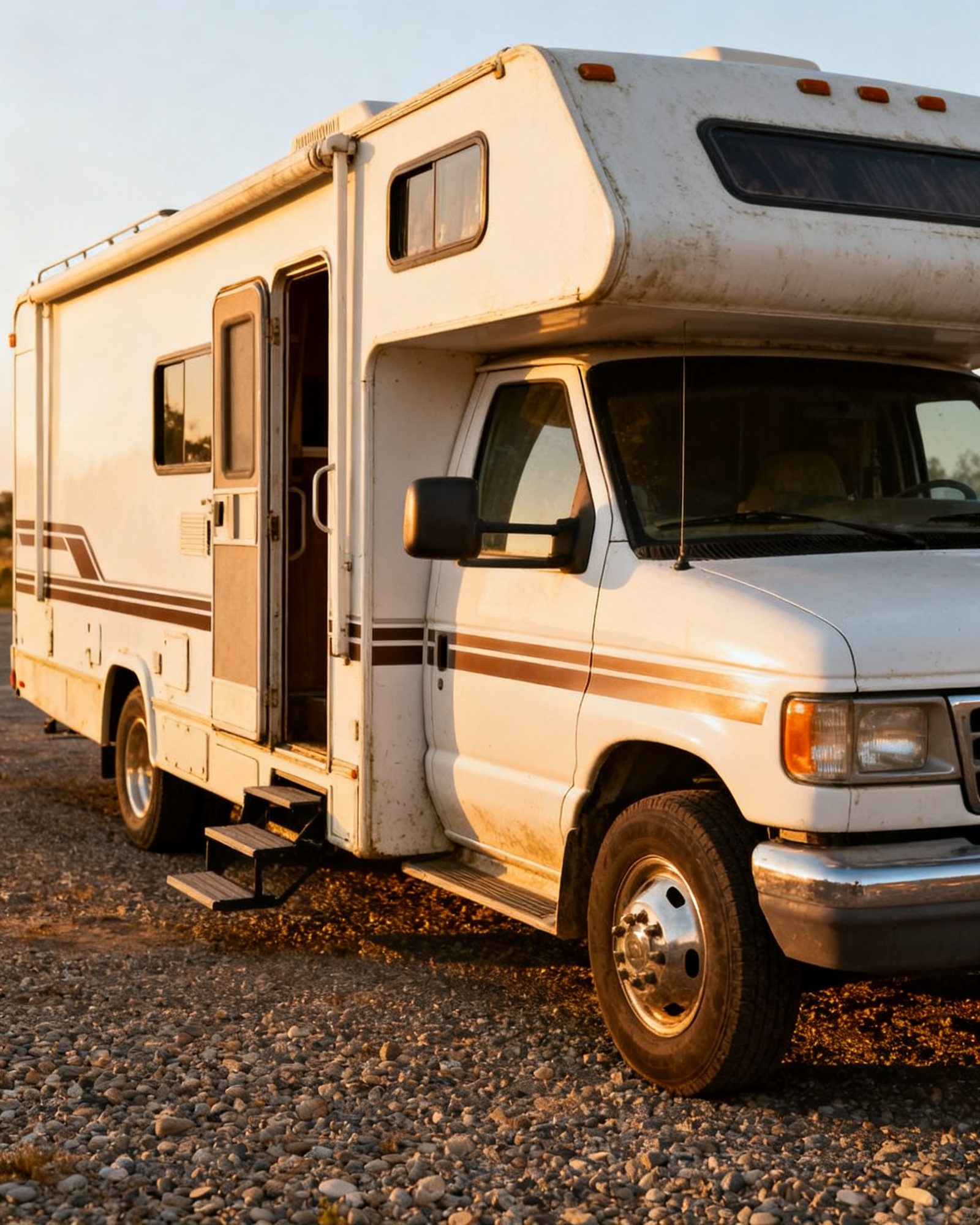
A dealer sells with a business address, a finance office and often a warranty; a private seller usually sells as-is at a lower price with no paperwork help. Neither route is automatically safer. The dealer’s lot carries documentation fees and add-ons you must itemize, and the private sale carries title and payment risk you must manage yourself. The right choice depends on how much you can inspect, how you will pay, and whether you need a warranty or a trade-in.
Dealer vs private seller, side by side
| Factor | Dealer | Private seller |
|---|---|---|
| Price room | Some, but fees and add-ons can absorb it | Usually more room, especially for cash |
| Inspection access | May allow an independent inspector; ask before deposit | Usually easier to arrange on the seller’s schedule |
| Warranty | May include a limited warranty or offer a service contract | Almost always as-is, no warranty |
| Financing | Arranged through the dealer’s lenders; compare APR and total cost | You arrange it; check with your lender |
| Trade-in | Accepted, but the allowance affects the deal | Not available |
| Paperwork | Dealer usually handles title transfer and temporary permits | You and the seller handle title, bill of sale and DMV |
| Title risk | Lower, but consignment and trade-ins still need a title check | Higher; you must verify the title and lien release |
| Recourse if something fails | Contract terms and any warranty | Usually none after the sale |
What dealer fees actually are
A used RV dealer may add a documentation fee, a preparation fee, and optional products such as a service contract, GAP coverage or a protection package. Ask for an itemized out-the-door total in writing before you sign. The advertised price is not the number you pay. Compare the total, not the monthly payment.
Consignment RVs on a dealer lot
A consignment RV is still owned by a private person; the dealer sells it for a fee or commission. Ask who is named on the title and whether the dealer has the signed title and a lien release in hand. A consignment unit can sit in a gray area: the dealer may not warranty it, and the owner may be slow to sign paperwork. Get the title status in writing before paying.
The pre-delivery walk-through
At a dealer, the walk-through is your last chance to see systems running before you take it. Ask for the water system pressurized, the water heater lit, the furnace and air conditioner running, every outlet and appliance tested, and the slide-outs cycled. Video the walk-through. If a system is not demonstrated, treat it as not working.
When each route makes sense
A dealer makes sense if you need financing, a trade-in, a warranty, or help with title and registration, and you are willing to pay for those in the price and fees. A private seller makes sense if you can inspect thoroughly, pay safely, and handle the DMV work yourself, and you want the price room that comes with no warranty. First-time buyers who cannot inspect an RV themselves should budget for an independent inspector either way.
Inspecting before you commit
An independent RV inspector, chosen and paid by the buyer, examines an RV before purchase. On a motorhome, a lab analysis of engine oil, coolant and transmission fluid can be added. Water damage is among the most common and most expensive defects in used RVs: soft spots in floors, walls or ceiling, stains, sagging, rot around windows, roof vents, the cabover, slide-outs and corners, and a musty smell. A moisture meter on interior walls finds damp that cannot be seen. Roof and seam sealants dry out and crack with age and must be inspected and renewed.
On a dealer lot, ask whether an independent inspection is allowed before you sign. On a private sale, arrange it at a time the seller can be present. Either way, a seller who refuses an inspection is a reason to walk.
Checking the title and paperwork
The seller named on the title should be the person selling, with photo ID that matches. If a lender holds a lien, it must be released before ownership can pass. A bill of sale records buyer, seller, date, the sale amount, VIN, year, make and model, and “as is” where there is no warranty. Federal law requires an odometer disclosure when a motor vehicle changes owner, with exemptions; trailers have no odometer. The state DMV supplies the forms. Titling, registration, sales tax, temporary permits and trailer rules vary by state: check your state DMV. For a fuller walk-through of the documents, see how to check an RV’s title and paperwork.
VIN, history and recalls
Since the 1981 model year, on-road vehicles sold in the US, trailers included, carry a 17-character VIN. The VIN appears on the title, the registration and the federal certification label on the vehicle; they must all match and show no sign of alteration. A motorhome can have safety recalls from two makers: the chassis manufacturer and the company that built the living area. The NHTSA recall lookup by VIN shows open safety recalls. NMVTIS reports title brands, odometer readings and total-loss records; the National Insurance Crime Bureau’s free VINCheck shows theft and total-loss records reported by participating insurers. Title brands include salvage, rebuilt or reconstructed, flood and junk, and a branded title affects financing, insurance and resale.
Paying safely
Vehicle-sale scams follow a pattern the FTC and FBI warn about: a listing far below comparable RVs, a seller who cannot meet, payment by wire transfer, gift cards or an “escrow” or shipping service the seller chooses, and pressure to pay before seeing the RV and the title. Paying a private seller safely means meeting at the buyer’s bank, checking the title and the seller’s ID, paying by cashier’s check or a transfer made in person, and signing the title and bill of sale at the same time. There is no general right to cancel a signed vehicle purchase afterwards, and a private sale is usually as-is.
At a dealer, read the buyer’s order before signing, confirm the out-the-door total, and ask in writing what happens to your deposit if the deal falls through.
Financing and warranties
An RV loan is usually secured by the RV. A longer term lowers the monthly payment, raises the total interest paid, and raises the chance of owing more than the RV is worth. Under the federal Truth in Lending Act, lenders must disclose the APR and the total finance charge before the borrower signs. Compare APRs and total cost, not monthly payments. Lenders set their own rules on the age, type and value of RV they will finance, so check with your lender. A pre-approval from a bank or credit union before shopping gives a figure to compare against dealer financing. For how loans work, see RV financing basics.
An extended service contract is a separate purchase with its own exclusions, deductibles and claims rules; it is not the maker’s warranty. Read what it excludes and who pays the repair shop. Dealers may offer one; a private seller generally cannot. Compare any dealer-offered contract against buying one separately, and read RV extended warranties and service contracts before you decide.
What goes wrong, and how to avoid it
- Paying the advertised price plus fees. Ask for the itemized out-the-door total before you negotiate. Documentation fees and optional products can erase the price room you thought you had.
- Buying a consignment unit without a title check. The dealer may not hold the title. Verify the owner’s name, lien release and signatures before paying.
- Skipping the inspection because the dealer is reputable. A dealer warranty may be limited. An independent inspection is still the best protection.
- Trusting a private seller’s “everything works.” Ask for a demonstration of every system, and treat anything not shown as broken.
- Paying a private seller before the title is signed. Meet at the bank, sign the title and bill of sale together, and do not wire money to a stranger.
- Ignoring water damage. Bubbles, waves or ripples in the sidewall mean delamination, usually a sign water has got in. Walk away from soft floors and musty smells unless you can price the repair.
- Forgetting the weight ratings. GVWR, GCWR, GAWR and cargo carrying capacity are set by the maker. The only way to know actual weight is a public scale: once it is yours, weigh it fully loaded, by axle where possible. A dealer or seller who cannot show the weight labels is a reason to slow down.
Where to look next
If you are shopping motorhomes, see used motorhomes for sale for where to look and how to buy safely. If you are buying privately, used campers for sale by owner covers the private-sale process in detail. Whichever route you choose, inspect first, verify the title, and pay in a way you can document.
Common questions
Is it better to buy a used RV from a dealer or a private seller?
Neither is automatically better. A dealer gives you paperwork help, possible financing and sometimes a warranty, but adds documentation fees and optional products. A private seller usually sells as-is at a lower price, but you handle the title, payment and inspection yourself. Choose based on how much you can inspect and how you will pay.
What fees do RV dealers add to the price?
Dealers may add a documentation fee, a preparation fee, and optional products such as a service contract, GAP coverage or a protection package. Ask for an itemized out-the-door total in writing before you sign, and compare the total cost rather than the monthly payment.
Can I get an independent inspection on a dealer's lot?
Ask before you put down a deposit whether the dealer will allow an independent RV inspector, chosen and paid by the buyer, to examine the RV. If a dealer refuses, treat that as a reason to walk away. On a private sale, arrange the inspection at a time the seller can be present.
What is an RV consignment sale?
A consignment RV is owned by a private person and sold through a dealer for a fee or commission. The dealer may not warranty it, and the owner must sign the title. Ask who is named on the title and whether the dealer has the signed title and any lien release in hand before you pay.
How do I pay a private RV seller safely?
Meet at the buyer's bank, check the title and the seller's photo ID, and pay by cashier's check or a transfer made in person. Sign the title and bill of sale at the same time. Do not wire money or use gift cards, and do not pay before you have seen the RV and the title.
Read next
Repo RVs for Sale: How Bank Repos and Auctions Work
How repossessed RVs reach the market, what as-is really means, and how to inspect, bid and check the title before you commit to a repo RV.
Used RV Scams: Fake Listings, Escrow Tricks and Safe Payment
Learn the common used RV scams, from fake listings and escrow tricks to wire-transfer demands, plus how to check a seller and pay safely in person.
RV Title Transfer and Paperwork for a Used RV Purchase
How RV title transfer works when buying used: title and lien release, bill of sale, odometer disclosure, registration, sales tax and cross-state deals.