Travel Trailer vs Fifth Wheel: How They Tow and What to Check
Compare used travel trailers and fifth wheels: hitching, tow vehicles, tongue vs pin weight, layouts, toy haulers, and what to inspect before you buy.
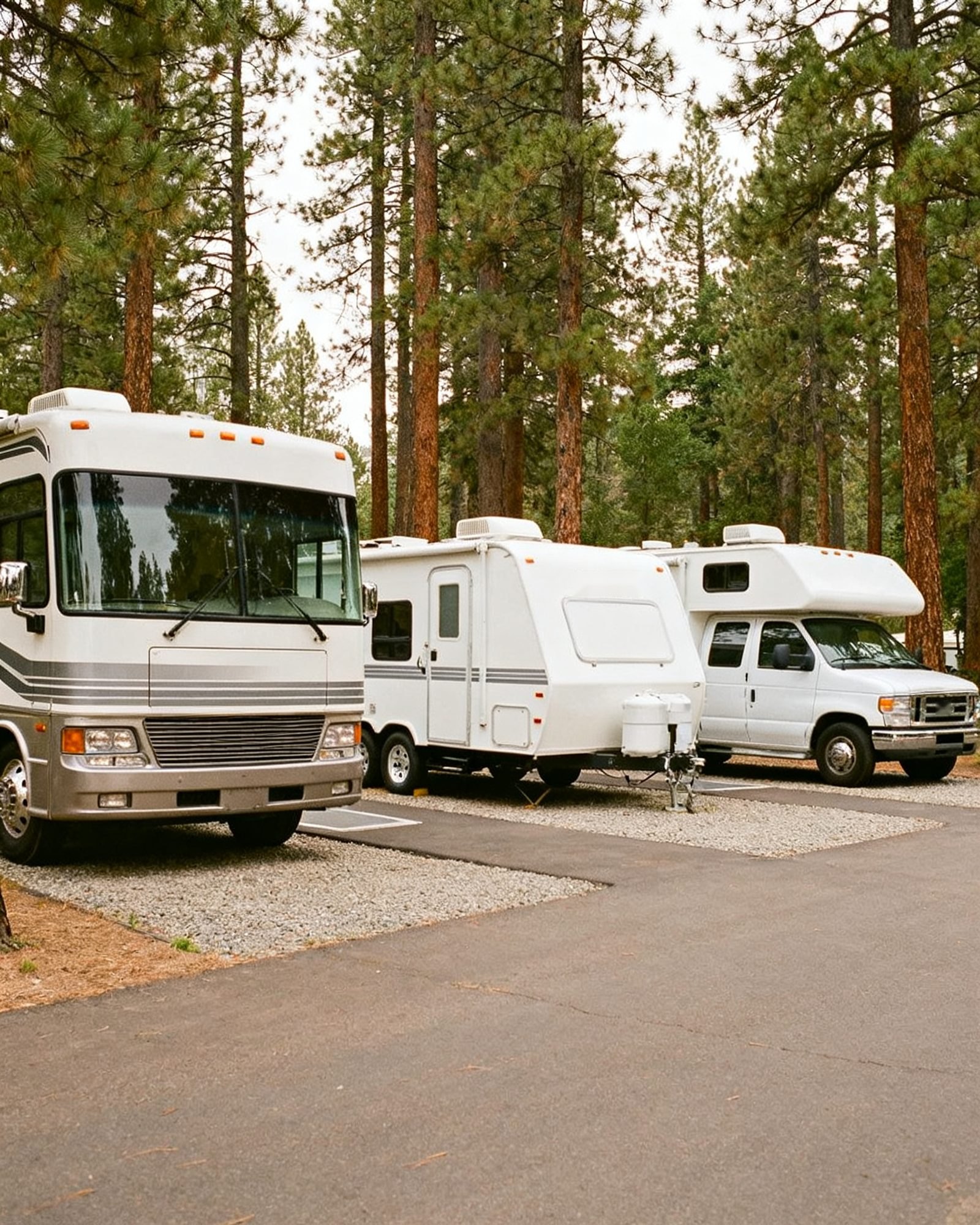
A travel trailer hitches to a ball at the back of the tow vehicle and puts its tongue weight behind the rear axle. A fifth wheel drops onto a hitch mounted in the bed of a pickup, so part of its weight sits over or just ahead of the rear axle. That single difference shapes the tow vehicle you need, how the combination handles, how much room you get, and what to inspect on a used unit. This comparison covers both types as they are built and sold in the US, with the checks that matter when you are buying used.
How each one hitches and tows
A travel trailer is a bumper pull. The coupler on the trailer tongue locks onto a ball on the tow vehicle’s receiver or bumper. The trailer pivots at the ball, so the rear of the tow vehicle and the front of the trailer swing through turns. Weight-distributing hitches spread tongue weight across the tow vehicle’s and trailer’s axles, and sway control resists trailer sway. Sizes run from small single-axle trailers to large ones close to fifth-wheel size.
A fifth wheel has a raised front section that rests over the bed of a pickup on a fifth-wheel hitch. The pivot point sits over or just ahead of the rear axle, which makes the combination track more like a single unit and shortens the overall length for a given amount of living space. It needs a pickup truck to tow it, and the hitch is mounted in the bed.
Neither type has an engine. Both are towables, so the tow vehicle does the work and carries part of the load. For a wider view of how towables sit alongside motorhomes, see RV types explained: Class A, B and C motorhomes and towables.
Tongue weight vs pin weight
Tongue weight of a conventional travel trailer is commonly 10 to 15 percent of the loaded trailer weight. Fifth-wheel pin weight is commonly 15 to 25 percent. That higher percentage is why a fifth wheel usually needs a heavier pickup than a travel trailer of similar length. The pin weight lands in the truck bed, ahead of or over the rear axle, and counts against the truck’s payload.
A pickup’s payload is on the tire and loading label on the driver’s door jamb. It must cover passengers, cargo, the hitch and the tongue or pin weight. For a travel trailer, the hitch and tongue weight are at the back; for a fifth wheel, the hitch and pin weight are in the bed. Either way, the only way to know actual weight is a public scale: weigh fully loaded, by axle where possible. The weight ratings and hitch setup are covered in detail in towing a travel trailer: weight ratings, hitches, brakes and sway.
Tow vehicle: what each type demands
A travel trailer can be pulled by a properly equipped pickup, SUV or large van, provided the tow vehicle’s ratings cover the loaded trailer and its tongue weight. A fifth wheel needs a pickup with a fifth-wheel hitch in the bed. That generally means a heavier-duty pickup than a travel trailer of similar size would require, because of the pin weight and the hitch hardware.
| Point | Travel trailer | Fifth wheel |
|---|---|---|
| Hitch | Ball on receiver or bumper | Fifth-wheel hitch in pickup bed |
| Weight on tow vehicle | Tongue weight, commonly 10 to 15 percent of loaded trailer weight | Pin weight, commonly 15 to 25 percent of loaded trailer weight |
| Tow vehicle | Properly equipped pickup, SUV or large van | Pickup truck with fifth-wheel hitch |
| Pivot point | At the ball, behind the rear axle | Over or just ahead of the rear axle |
| Size range | From small single-axle trailers to large ones close to fifth-wheel size | Medium to very large, with a raised front section over the truck bed |
A truck camper is a different answer again: it slides into the bed and is held by tie-downs, and it can be taken off so the truck is used on its own. Matching a camper to a pickup is covered in truck campers: matching a used camper to your pickup.
Space, layouts and toy haulers
The fifth wheel’s raised front section gives it a bedroom or storage area over the truck bed, so a given overall length can yield more living space than a travel trailer. Travel trailers make up for that with a lower profile and a wider choice of tow vehicles. Both types come in a range of floor plans, from small couples’ layouts to bunkhouse models.
A toy hauler is a travel trailer, fifth wheel or motorhome with a rear ramp door and a garage area for motorcycles, ATVs or other gear. Toy haulers exist in both travel-trailer and fifth-wheel forms. The garage adds weight and length, and the ramp and its seals are extra items to inspect on a used unit.
A folding (pop-up) camper and a teardrop trailer are much smaller towables; a hybrid (expandable) trailer has a hard body with fold-out tent beds. These are not direct competitors to a fifth wheel, but they matter if you are comparing used travel trailers for sale across the whole size range.
What to inspect on a used towable
A used towable has no engine or transmission, so the inspection focuses on the frame, running gear, body and seals. Do this before you agree on a price, and use an independent RV inspector chosen and paid by the buyer if you are not confident.
Frame and running gear
- Look under the trailer for rust, cracks, bent or repaired frame members, and loose or missing fasteners.
- Check the axles for bends and the springs for broken leaves or flattened curves.
- Ask when the wheel bearings were last serviced, and have an inspector or shop lift each wheel safely to check for play and roughness. Bearing service is routine maintenance on a used trailer.
- Inspect the brakes. Trailers with electric brakes need a brake controller in the tow vehicle. Many states require trailer brakes and a breakaway system above a weight they set - check your state DMV. A breakaway switch applies the trailer’s brakes if it comes off the tow vehicle.
- Look at the tires. ST (special trailer) tires are for trailer axles only; ST tires without a speed rating are limited to 65 mph. The DOT code on the sidewall ends in four digits giving week and year of manufacture: 2419 means the 24th week of 2019. RV tires often age out before the tread wears out; common guidance is a yearly inspection once tires are 5 years old and replacement no later than 10 years from the date of manufacture.
Hitch and coupling
On a travel trailer, inspect the coupler, the safety chains (crossed under the tongue), the breakaway cable and the jack. On a fifth wheel, inspect the pin box, the hitch plate in the truck bed and the landing gear. Never use a hitch, ball or receiver rated below the load.
Roof, seals and water damage
Water damage is among the most common and most expensive defects in used RVs. Roof and seam sealants dry out and crack with age and must be inspected and renewed. Common roof membranes are EPDM (rubber), TPO, fiberglass and aluminium; a roof can be walked on only where its maker says so. Check around roof vents, skylights, the front and rear caps, and the corners. On a fifth wheel, pay close attention to the raised front section and its seams. On a travel trailer, check the front wall and the area around the hitch.
Delamination is the outer fiberglass skin separating from the wall behind it - bubbles, waves or ripples in the sidewall - and is usually a sign that water has got in. A moisture meter on interior walls finds damp that cannot be seen. Soft spots in floors, walls or ceiling, stains, sagging, rot around windows and a musty smell are all warning signs.
Slide-outs are rooms that extend outward when parked, sealed by rubber seals; each adds weight, a mechanism and seals to maintain. Inspect the seals and the slide mechanism on both types.
Paperwork and history
Since the 1981 model year, on-road vehicles sold in the US - trailers included - carry a 17-character VIN. A VIN never uses the letters I, O or Q. The 10th character gives the model year. The VIN appears on the title, the registration and the federal certification label on the vehicle; they must all match and show no sign of alteration. Trailers have no odometer, so no odometer disclosure applies. Check the title for liens and brands. A branded title affects financing, insurance and resale.
What goes wrong: common mistakes and red flags
- Mismatching the tow vehicle. A fifth wheel’s pin weight is higher than a travel trailer’s tongue weight for a similar loaded weight, and it lands in the truck bed. Buyers who check only the trailer’s dry weight and not the truck’s payload can run out of capacity once passengers, cargo, water and hitch are added.
- Skipping the frame and running gear. A clean body can hide a bent axle, worn bearings or a cracked frame. These are expensive to fix and affect how the trailer tracks and brakes.
- Ignoring water damage. Bubbles in the sidewall, soft floors and a musty smell point to leaks that may have been sealed over rather than repaired. Roof and seam sealants need regular renewal, and a used unit with neglected seals is a risk.
- Overlooking tire age. Tread depth tells you little on a trailer tire that has aged out. Check the DOT date code on every tire, including the spare.
- Buying a branded title without understanding it. Salvage, rebuilt or reconstructed, flood and junk titles vary by state and affect financing, insurance and resale. A private sale is usually as-is, with no warranty, and there is no general right to cancel a signed vehicle purchase afterwards.
- Paying before seeing the RV and the title. Vehicle-sale scams follow a pattern the FTC and FBI warn about: a listing far below comparable RVs, a seller who cannot meet, payment by wire transfer, gift cards or an “escrow” or shipping service the seller chooses, and pressure to pay before seeing the RV and the title. Meet at the buyer’s bank, check the title and the seller’s ID, and sign the title and bill of sale at the same time.
Propane and electrical systems
Both types carry propane and 120-volt electrical systems. Propane is heavier than air and collects low; RVs have an LP gas detector near the floor. If you smell propane: put out flames, do not operate electrical switches, close the tank valve if it is safe to do so, open doors, get everyone out, and have the system checked by a qualified RV technician before using it again. Propane system work - leak testing, regulators, lines and appliances - is a job for a qualified RV technician. Work on 120-volt or 240-volt wiring, the converter, inverter or generator is also a job for a qualified RV technician. Test the smoke, carbon monoxide and LP gas alarms and replace them by the date on the unit.
Matching the type to the buyer
A travel trailer suits a buyer who wants a wide choice of tow vehicles, a lower profile, or a trailer that can be pulled by an SUV or van within its ratings. A fifth wheel suits a buyer with a suitable pickup who wants more living space for a given length and is prepared for the higher pin weight and the hitch in the bed. A toy hauler suits a buyer who needs to carry motorcycles or ATVs and accepts the extra weight and length. Whichever you choose, inspect the frame, running gear, hitch, roof and seals, and confirm the tow vehicle’s ratings before you commit.
Common questions
What is the difference between a travel trailer and a fifth wheel?
A travel trailer hitches to a ball at the back of the tow vehicle and puts its tongue weight behind the rear axle. A fifth wheel has a raised front section that rests over the bed of a pickup on a fifth-wheel hitch, so part of its weight sits over or just ahead of the rear axle. That changes the tow vehicle needed and how the combination handles.
Can I tow a fifth wheel with a half-ton pickup?
It depends on the truck's payload and the fifth wheel's pin weight. Pin weight is commonly 15 to 25 percent of the loaded trailer weight, and it counts against the truck's payload along with passengers, cargo and the hitch. Check the tire and loading label on the driver's door jamb and weigh the loaded combination at a public scale.
Which is easier to tow, a travel trailer or a fifth wheel?
A fifth wheel's pivot point over the rear axle makes the combination track more like a single unit, and it is less affected by crosswinds and passing trucks. A travel trailer pivots at the ball and benefits from a weight-distributing hitch and sway control. Both need a properly rated tow vehicle and correct loading.
What should I check on a used travel trailer or fifth wheel?
Inspect the frame for rust and cracks, the axles and springs, the wheel bearings, the brakes and the tires (including the DOT date code). Check the hitch or pin box, the roof and all seals for water damage, and look for delamination, soft floors and a musty smell. Confirm the VIN on the title, registration and certification label match.
Do I need a special license to tow a fifth wheel?
The federal commercial driver's license does not apply to personal-use RVs, but some states require a special non-commercial license or endorsement for heavy motorhomes or long or heavy combinations. A GVWR over 26,000 pounds is a common threshold, but each state sets its own - check your state DMV.
Read next
Used 4x4 Motorhomes and Off-Road Campers in the USA
Compare used 4x4 motorhome types: camper vans, 4x4 Class C, truck campers and expedition trucks. Learn what four-wheel drive adds and what to inspect.
Used Class B RVs and Camper Vans: What to Check
A practical guide to buying a used Class B RV or camper van: how they are built, who they suit, wet baths, tank sizes, home conversions and what to inspect.
Used Class C Motorhomes: Who They Suit and What to Check
How a used Class C motorhome is built, who it suits, how it drives, and what to inspect - especially the cabover, the classic spot for water leaks.