RV Electrical Basics: 30 Amp vs 50 Amp, Batteries, Generators
Understand 30-amp vs 50-amp RV service, adapters, 12-volt batteries, converters, inverters, surge protection and generator safety before you plug in.
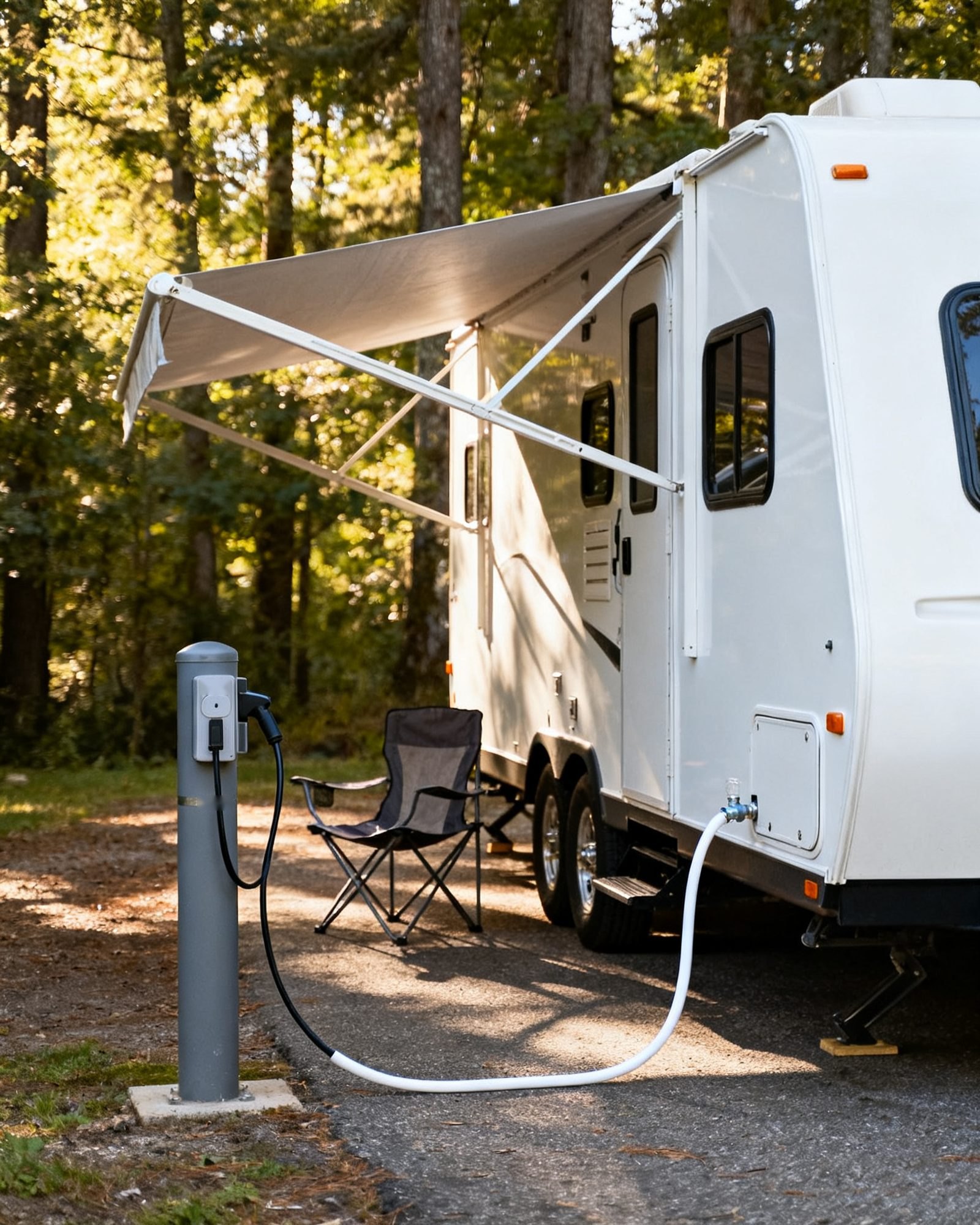
The difference between 30-amp and 50-amp RV service is the shape of the power available, not just the size of the plug. A 30-amp RV gets 120 volts on a three-prong TT-30 plug, about 3,600 watts. A 50-amp RV gets 120/240 volts on a four-prong 14-50 plug with two 50-amp legs, up to 12,000 watts. That extra capacity can run a second air conditioner and more appliances at once. Before buying a used RV, know which service it uses, what its 12-volt system needs and how the generator is meant to be run. Electrical work on shore power, converters, inverters and generators is a job for a qualified RV technician; this page explains what the systems do and what to check, not how to repair them.
Shore power: what each service can run
| Service | Plug | Voltage | Maximum power | What it typically runs |
|---|---|---|---|---|
| 30-amp | Three-prong TT-30 | 120 volts | About 3,600 watts | One air conditioner, lights, TV, microwave, converter; manage heavy loads |
| 50-amp | Four-prong 14-50 | 120/240 volts, two 50-amp legs | Up to 12,000 watts | Two air conditioners, electric water heater, appliances together |
| Household 15-amp or 20-amp outlet | Standard household outlet with adapter | 120 volts | Limited to that outlet’s capacity | Battery charging, lights, a fan; not air conditioning or heavy appliances |
A 30-amp RV must never be connected to a household 240-volt outlet such as a dryer outlet. The TT-30 plug is 120 volts only, and a 240-volt feed can destroy the RV’s electrical system and create a fire risk. With an adapter, an RV can use 15-amp and 20-amp household outlets, but the load is limited to that outlet’s capacity. Long extension cords and undersized adapters cause voltage drop and heat; use a cord rated for the load and keep it as short as practical.
Adapters let a 50-amp RV plug into a 30-amp pedestal, or a 30-amp RV plug into a 50-amp pedestal, but they do not create more power. A 50-amp RV on a 30-amp adapter can draw only about 3,600 watts, so heavy appliances must be managed. A 30-amp RV on a 50-amp adapter still has only 30-amp wiring and a 30-amp main breaker; the adapter does not upgrade the RV. Check the pedestal breaker rating and the plug condition before connecting. A burned or loose pedestal is a reason to ask for another site.
The 12-volt system: batteries, converter and inverter
The coach (house) battery system is 12 volts DC. Two 6-volt batteries wired in series also make 12 volts. This system runs lights, the water pump, the furnace fan, the refrigerator control board and other low-draw items when shore power is disconnected. A converter charges the batteries and runs 12-volt systems from shore power. An inverter makes 120-volt AC from the batteries, letting you run small appliances when no shore power is available. The common question, RV converter vs inverter, is answered by their direction: the converter goes from shore power to 12-volt DC; the inverter goes from battery DC to 120-volt AC.
Battery types need different charging profiles. Lead-acid batteries (flooded and AGM) and lithium iron phosphate batteries are not interchangeable without checking the converter and any solar controller. Most lithium iron phosphate batteries must not be charged below freezing unless they have built-in heating. Flooded lead-acid batteries need their water level checked and topped up with distilled water. When inspecting a used RV, ask how old the batteries are, whether they have been kept charged in storage and whether the converter is set for the battery type installed. A battery that has been left flat for long periods may not recover.
Battery maintenance is part of the seasonal routine. A battery maintainer or disconnect during storage prevents the slow drain that kills batteries. Check the date on the battery and test it under load before a trip. The RV maintenance schedule covers battery checks along with roof, sealant and tire inspection.
Surge protection and campground power
A surge protector or electrical management system protects against faulty campground pedestals. These devices sit between the pedestal and the RV cord and can shut off power if the voltage is too high or too low, or if the wiring is miswired. A basic surge protector handles voltage spikes; an electrical management system adds low-voltage and miswiring protection. Neither is a substitute for inspecting the pedestal. Look for a burned outlet, a loose breaker or a missing cover, and report it to the campground before plugging in.
Campground hookups vary. Full hookups mean water, electric and sewer at the site; partial hookups mean some of them; dry camping or boondocking means none. The RV campgrounds and hookups page explains how to plan for each. When dry camping, the 12-volt system and the generator carry the load, and battery capacity becomes the limit.
Generators: carbon monoxide and load limits
An RV generator makes 120-volt power when shore power is not available. Generator exhaust contains carbon monoxide, a colorless, odorless gas. The CO alarm must work, and a generator must never run with its exhaust blocked by snow, walls or other vehicles, or near open windows. Test the CO alarm before every trip and replace it by the date on the unit. Never run a generator inside a closed garage or near a sleeping area.
Before buying a used RV with a generator, ask for the maintenance records and have a qualified RV technician inspect and service it. Generator work, including fuel system and electrical repairs, is a job for a qualified RV technician. Do not attempt to repair a generator yourself. Check that the generator starts, runs smoothly and carries a load, but leave the diagnosis to a technician.
What goes wrong: red flags and common mistakes
Electrical problems in used RVs often trace back to misuse or neglected maintenance. Watch for these red flags:
- Burned or melted plugs and outlets. A sign of overload, loose connection or a bad pedestal. Have the cord and inlet checked by a qualified RV technician.
- A 30-amp RV connected to a 240-volt outlet. This can destroy the converter, the inverter and appliances. If the seller mentions using a dryer outlet, walk away or budget for a full electrical inspection.
- Batteries that are old, mismatched or not charging. Check the date, the water level in flooded batteries and whether the converter is working. A set of mismatched batteries can drain each other.
- No surge protection. A single bad pedestal can damage the converter and appliances. A surge protector or electrical management system is inexpensive insurance.
- Generator exhaust leaks or a missing CO alarm. Carbon monoxide is a serious risk. Test the alarm and have the generator inspected.
- DIY wiring repairs. Household extension cords used as permanent wiring, wire nuts in place of proper connectors and missing junction box covers are signs of unsafe work. Electrical work on 120-volt or 240-volt wiring, the converter, inverter or generator is a job for a qualified RV technician.
Propane and electrical systems often sit close together in an RV. If you smell propane, put out flames, do not operate electrical switches, close the tank valve if it is safe to do so, open doors, get everyone out, and have the system checked by a qualified RV technician before using it again. The RV propane safety page covers tanks, leaks and detectors.
What to check before you buy
Bring a checklist and test what you can safely test. Ask the seller to demonstrate the 12-volt system, the converter and the generator. Check that the shore power cord and inlet are not damaged. Look at the battery compartment for corrosion, loose cables and mismatched batteries. Test the CO alarm and the smoke alarm. Ask for maintenance records for the generator and the batteries. If the seller cannot show that the electrical system has been maintained, plan for an inspection by a qualified RV technician before you rely on it.
A pre-purchase inspection by an independent RV inspector can include the electrical system. The inspector can check the converter, inverter, batteries and generator, and identify unsafe wiring. This is especially important for a used RV with unknown history. The cost of an inspection is small compared with repairing a burned converter or a failed generator.
Living with the system you have
Match your habits to the service you have. On 30-amp service, run one heavy appliance at a time. On 50-amp service, you have more headroom but still need to respect the total load. When dry camping, turn off unnecessary lights and use the generator only as needed. Keep the battery bank charged and check the water level in flooded batteries regularly. In storage, disconnect the batteries or use a maintainer. Electrical systems age, and connections loosen; a yearly check by a qualified RV technician catches problems before they strand you.
Common questions
Can I plug my 30-amp RV into a 50-amp pedestal?
Yes, with a 50-amp-to-30-amp adapter. The adapter does not increase the RV's capacity; the 30-amp main breaker still limits the load to about 3,600 watts. Check the adapter and pedestal for damage before use.
What is the difference between an RV converter and an inverter?
A converter takes 120-volt shore power and makes 12-volt DC to charge the batteries and run 12-volt systems. An inverter takes 12-volt battery power and makes 120-volt AC to run small appliances when no shore power is available.
How often should RV batteries be replaced?
Battery life depends on type, use and maintenance. Flooded lead-acid batteries need regular water checks; lithium iron phosphate batteries have different charging needs. Test the batteries under load and check the date; replace them when they no longer hold a charge.
Is it safe to run my RV generator all night?
Only if the exhaust is not blocked and the CO alarm is working. Never run a generator near open windows or in an enclosed space. Carbon monoxide is colorless and odorless, and generator exhaust can be deadly.
Do I need a surge protector for my RV?
A surge protector or electrical management system protects against faulty campground pedestals, voltage spikes and miswiring. It is a worthwhile investment for any RV with sensitive electronics and appliances.
Read next
RV Campgrounds and Hookups: Full Hookup to Boondocking
Full hookup, partial hookup or no hookup at all: how RV campgrounds and public-land camping work, what each site gives you and how to pick one.
Your First RV Trip: A Shakedown Checklist
Plan a first RV trip in a used RV with a shakedown close to home, a departure checklist, driving and parking tips, and the mistakes that catch new owners.
RV Maintenance Checklist: A Seasonal Schedule for a Used RV
A practical RV maintenance checklist for used motorhomes, campers and trailers: what to check before each trip, monthly, each spring and fall, and yearly.