The Real Cost of Owning an RV: Every Line Item
A line-by-line look at what a used RV really costs to own: purchase, tax, insurance, storage, upkeep, tires, fuel and campsites, plus costs first-timers forget.
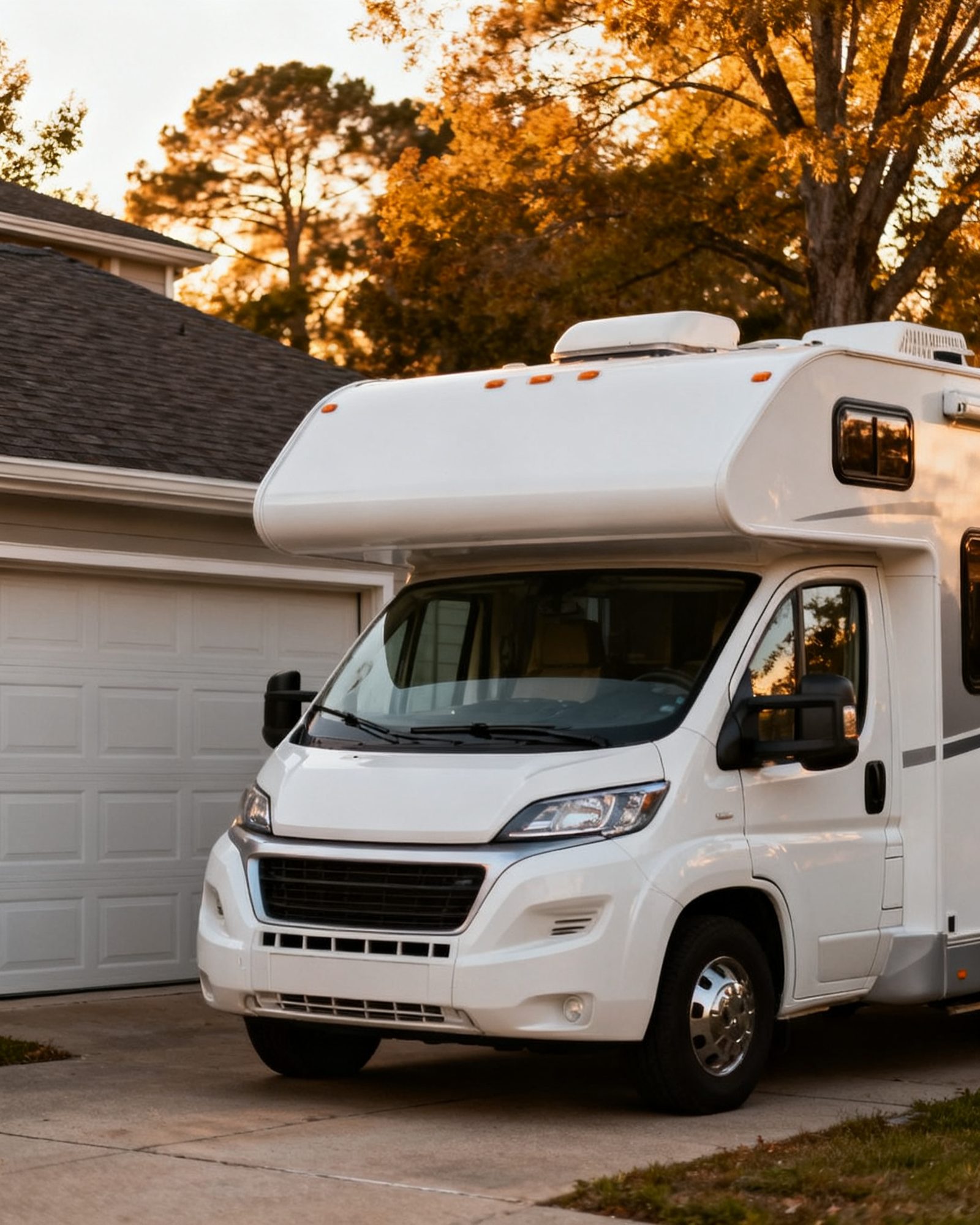
The cost of owning an RV is not the purchase price. It is the purchase price plus tax and registration, insurance, loan interest, storage, upkeep, tires, fuel, campsites, tolls and whatever you tow or drive behind it - and then the loss in value when you sell. Some of those bills arrive once; others arrive every month whether the RV moves or not. The way to keep the total under control is to list every line before you buy, decide which ones you can influence, and accept the ones you cannot.
Every cost of ownership, and what moves it
The table below is the full list. The right-hand column is what drives each cost up or down - that is where your decisions actually change the total.
| Cost | When it hits | What drives it up or down |
|---|---|---|
| Purchase price | Once | Age, condition, floor plan, maintenance records, title status |
| Sales tax and titling | Once, at purchase | Your state’s rules; whether the sale is private or through a dealer |
| Registration and plates | Yearly or as your state sets | Vehicle weight and type; check your state DMV |
| Loan interest | Monthly until paid | APR, amount financed, term length; check with your lender |
| Insurance | Monthly or yearly | Coverage chosen, RV type, whether it is a motorhome or a towable, where it is stored |
| Depreciation | On sale, or continuously | Age, condition, demand for the floor plan, title brand |
| Storage | Monthly | Whether you can park it at home; indoor versus outdoor; climate |
| Maintenance | Seasonal and yearly | Roof and seal condition, how much you do yourself, records kept |
| Repairs | Unpredictable | Water damage, appliances, chassis wear, how the RV was stored |
| Tires | Every several seasons | Age of tires, sun exposure, load carried, correct inflation |
| Fuel | Every trip | Weight, frontal area, speed, terrain, towing |
| Campsites | Every trip | Full hookups versus dry camping; public versus private |
| Tolls | Every trip | Route, vehicle height and axles |
| Tow vehicle or towed car | Once, plus its own running costs | Weight ratings, whether you already own a suitable vehicle |
The lines first-time owners forget
Four lines catch people out. Storage is the first: an RV that does not fit at home rents space every month, and that bill continues in the off-season. Tires are the second: RV tires often age out before the tread wears out, so a set can be due on a vehicle that has barely moved. The tow vehicle or towed car is the third: a trailer needs something rated to pull it, and many motorhome owners tow a car behind for local trips, each with its own insurance, upkeep and fuel. The fourth is the small yearly spend on sealants, filters, batteries and alarms - not dramatic, but it never stops.
How a used RV gets financed, and what it adds
An RV loan is usually secured by the RV itself. A longer term lowers the monthly payment but raises the total interest paid and raises the chance of owing more than the RV is worth - negative equity - if you sell early. Under the federal Truth in Lending Act, the lender must disclose the APR and the total finance charge before you sign, so compare those two numbers rather than the monthly figure. Lenders set their own rules on the age, type and value of RV they will finance, so a pre-approval from a bank or credit union before you shop gives you a figure to compare against dealer financing. The mechanics are set out in RV financing basics: how loans for a used RV work.
Ask for an itemized out-the-door total before signing. Dealers may add documentation fees and optional products - service contracts, GAP coverage, protection packages - and each one changes the total. An extended service contract is a separate purchase with its own exclusions, deductibles and claims rules; it is not the maker’s warranty. Read what it excludes and who pays the repair shop.
Insurance: what the policy has to cover
State law sets liability requirements for motorhomes driven on public roads. Beyond that, collision and comprehensive cover the RV itself, and options include total loss replacement, agreed value, personal effects, vacation liability, full-timer coverage and roadside assistance. Coverage for a towed trailer depends on the policy, so check with your insurer before assuming the trailer is covered by the tow vehicle’s policy. A branded title - salvage, rebuilt, flood or junk - affects both financing and insurance, so confirm the title status before you shop for coverage. The coverage choices are explained in RV insurance basics: what coverage a used RV needs.
Depreciation: the cost you pay at the end
RVs lose value over time, most steeply in their first years. Condition, floor plan, maintenance records and a clean title all affect what a used one is worth when you sell. For a used buyer this cuts both ways: someone else has taken the steepest part of the drop, but your own RV will still be worth less when you sell than when you bought it. That gap is a real ownership cost even though no bill arrives for it. The pattern is covered in RV depreciation: how used RVs lose value and why it favors buyers.
Upkeep: the yearly bill that never stops
Maintenance on a used RV is mostly about water. Roof and seam sealants dry out and crack with age and must be inspected and renewed. Water damage is among the most common and most expensive defects in used RVs, and a small leak found early is a sealant job while one found late is a rebuild. Budget for an annual roof and seal inspection, battery care, alarm testing and replacement by the date on the unit, and whatever the chassis needs. A seasonal routine is set out in RV maintenance: a seasonal schedule for a used RV.
Some work is not a DIY line item. Propane system work - leak testing, regulators, lines and appliances - is a job for a qualified RV technician. So is any work on 120-volt or 240-volt wiring, the converter, inverter or generator. Plan for those as technician bills, not weekend projects.
What goes wrong: the costs that surprise people
- Buying on the monthly payment. A long term makes an expensive RV look affordable and hides the total interest and the negative equity.
- Skipping the inspection. An independent RV inspector, chosen and paid by the buyer, is cheap next to a delaminated wall or a soft floor. A moisture meter on interior walls finds damp that cannot be seen.
- Forgetting storage before purchase. Measure the parking space and check the rules where you live before you buy, not after.
- Assuming the trailer is insured. Check with your insurer how a towable is covered.
- Ignoring tire dates. The DOT code ends in four digits giving week and year of manufacture. Tires that look fine can be past the point where replacement is advised.
- Underestimating fuel. Weight, frontal area, speed and terrain all raise consumption, and a headwind or a mountain pass makes it worse.
- Treating the first campsite as the typical one. Full hookups cost more than dry camping, and many older public campgrounds have sites too short for large RVs - check the site length before booking.
- No repair reserve. Repairs are unpredictable; a reserve kept aside is what stops a breakdown from becoming a financing decision.
- Buying without checking the title. A branded title affects financing, insurance and resale. The paperwork steps are covered in how to check an RV’s title.
Is owning an RV worth it?
The honest answer is that it depends on how many of these lines you can control. If you can store it at home, do the simple upkeep yourself, keep it under cover and use it often, the fixed costs spread over more nights and the total looks very different from an RV that sits in paid storage and moves twice a year. If you will use it rarely, rent or borrow before buying - the cost of ownership is mostly fixed, and it does not shrink when the RV sits.
Before you commit, write the list out with your own numbers: purchase, tax and registration, insurance, loan interest, storage, a yearly maintenance allowance, a repair reserve, tires set aside over their life, fuel per trip, campsites per trip and tolls. Add the tow vehicle or towed car. Then compare that total with what the same trips would cost another way. If the RV still makes sense on that sheet, the cost is known rather than hidden.
Keeping the total down without cutting corners
- Buy after an inspection, not instead of one.
- Compare APRs and total finance cost, not monthly payments.
- Keep maintenance records - they protect resale value.
- Store under cover where possible; sun on tires and drying seals are the usual storage damage.
- Use a battery maintainer or disconnect in storage.
- Inflate tires to the pressure for the actual load, measured cold, and weigh the loaded RV at a public scale.
- Fix sealant the season it cracks, not the season after.
- Keep the repair reserve separate and topped up.
None of this removes the cost of owning an RV. It makes the cost visible before you sign, which is the only version of the number that is worth planning around.
Common questions
What are the hidden costs of owning an RV?
Storage, insurance, registration, loan interest, yearly sealant and alarm upkeep, tires that age out before the tread wears, fuel, campsites, tolls and the tow vehicle or towed car. Depreciation is also a real cost, though no bill arrives for it.
Is owning an RV worth it?
It depends on how many fixed costs you can control. If you can store it at home, do simple upkeep yourself and use it often, the cost per night falls. If it sits in paid storage and moves rarely, the fixed costs stay the same and the value is harder to justify.
How much does RV maintenance cost?
There is no single figure. The main yearly spend is roof and seal inspection and renewal, battery care, alarm testing and replacement, and chassis service. Water damage found late is the largest repair risk, and propane or electrical work is a job for a qualified RV technician.
Does a longer RV loan term cost more?
Yes. A longer term lowers the monthly payment but raises the total interest paid and raises the chance of owing more than the RV is worth if you sell early. Compare APRs and total finance cost, not monthly payments, and check with your lender.
Do I need separate insurance for a towable RV?
It can. Coverage for a towed trailer depends on the policy, so check with your insurer before assuming the tow vehicle's policy covers it. State law sets liability requirements for motorhomes driven on public roads.
Read next
RV Depreciation: How Used RVs Lose Value and Why It Favors Buyers
RV depreciation explained: why used RVs lose value fastest early, what slows the loss, and how buying used can work in your favor. No rates or prices.
RV Extended Warranty and Service Contracts: What to Check
A service contract is not the maker's warranty. Learn what to read, what exclusions to expect, and how to compare dealer and third-party coverage.
RV Insurance for a Used Motorhome or Trailer
What coverage a used RV needs: liability, collision, comprehensive, agreed value, full-timer and roadside. Compare motorhome and trailer policies before you buy.