Repo RVs for Sale: How Bank Repos and Auctions Work
How repossessed RVs reach the market, what as-is really means, and how to inspect, bid and check the title before you commit to a repo RV.
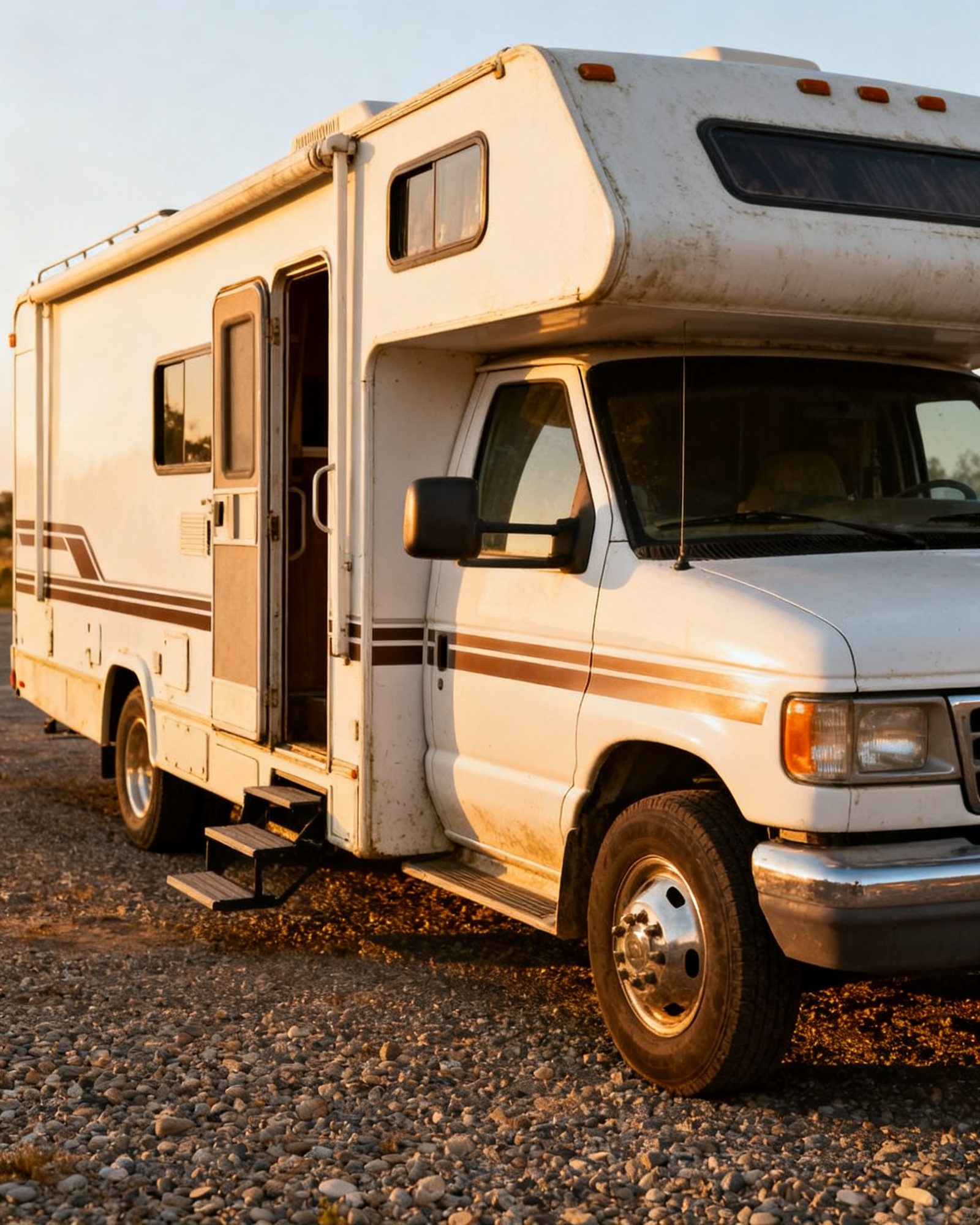
A repossessed RV is one a lender has taken back after the borrower stopped paying, and it is sold to recover the loan balance. Lenders sell these units through their own sales, through auctions or through dealers, usually as-is. That can put a used motorhome or camper in front of you at a lower price than a private seller would ask, but you are buying with less protection, often less information and sometimes a title that takes time to arrive. The process rewards a buyer who sets a firm limit, inspects in person and treats every missing record as a reason to look harder.
Who sells repossessed RVs, and how the sale runs
There are three routes, and each behaves differently.
Lender direct sales
Some banks and credit unions sell repossessed units themselves, often through a remarketing department. You may deal with a staff person rather than a salesperson, view the RV at a lot, and submit an offer. Paperwork is usually orderly, but the lender knows little about the RV’s history beyond what came back with it.
Auctions
Auctions sell repossessed motorhomes alongside fleet, estate and dealer units. Expect a buyer’s premium on top of the bid, a short inspection window, and rules that vary by auction house. Some run online only; some allow a preview day. Read the terms before you register, because the premium and the payment deadline change what you can actually afford.
Dealers
Dealers buy repo units at auction and resell them. You usually pay more, but you get a lot you can visit, a salesperson to question and sometimes a limited warranty. The RV is still a used unit with an unknown past.
| Route | Inspection time | Buyer’s premium | Paperwork speed | Recourse |
|---|---|---|---|---|
| Lender direct | Usually arranged | Generally none | Usually orderly | Limited, as-is |
| Auction | Short, sometimes a preview only | Often added | Can be slow on title | Very limited |
| Dealer | Full visit | Built into price | Usually faster | Whatever the contract says |
Why repo RVs are sold as-is
The lender never owned the RV to use it. It holds a security interest, not a maintenance log. It cannot tell you whether the roof was resealed, whether the holding tanks were winterized or whether the engine was serviced. Selling as-is shifts every unknown to the buyer, and that is the core risk of the category.
A private sale is also usually as-is with no warranty, and there is no general right to cancel a signed vehicle purchase afterwards. The difference with a repo is how little the seller can tell you and how little time you may get to look.
What usually goes wrong with a repossessed RV
A borrower who is losing the RV has little reason to spend on it. The failures below are common, and each one is expensive to correct.
- Deferred maintenance. Servicing stops first. Fluids, brakes, tires and seals may all be overdue.
- Winter damage. An RV stored without winterizing can split pipes, fittings, valves and the water heater. Water expands by about 9 percent as it freezes at 32 °F, and that is enough to crack plumbing.
- Water intrusion. Roof and seam sealants dry out and crack with age. Look for soft spots, stains, sagging and a musty smell around windows, roof vents, the cabover, slide-outs and corners.
- Missing keys, manuals and remotes. Keys can be cut or replaced, but missing manuals and appliance documents make every future repair slower.
- Flat or aged batteries. The coach battery may be dead, and tires may have aged out while sitting.
- Short inspections. At auction you may get minutes, not hours, and no chance to run systems on shore power or water.
- Buyer’s premium and fees. The bid is not the total. Read the auction’s fee schedule and payment terms before you raise a paddle.
- Slow title transfer. The lender’s paperwork can take time, and a lien must be released before ownership passes.
Inspecting before you bid
Treat a repo like any used RV, but with less benefit of the doubt. Work through a structured used RV inspection checklist and write down what you find. Where the auction allows it, bring a moisture meter and check interior walls for damp that cannot be seen. Look at the sidewalls for bubbles, waves or ripples: delamination is the outer fiberglass skin separating from the wall, usually a sign water has got in.
Where the seller allows it, have an independent RV inspector, chosen and paid by you, examine the RV before you bid or buy. On a motorhome, a lab analysis of engine oil, coolant and transmission fluid can be added. On a repo, that analysis is worth more than usual, because service records are likely absent.
Check the tires. The DOT code on the sidewall ends in four digits giving week and year of manufacture, so 2419 means the 24th week of 2019. RV tires often age out before the tread wears out; common guidance is a yearly inspection once tires are 5 years old and replacement no later than 10 years from the date of manufacture, whatever the tread looks like.
Test the alarms. RVs carry smoke, carbon monoxide and LP gas alarms, and they should be tested and replaced by the date on the unit. If you smell propane, put out any flames, do not operate electrical switches, close the tank valve if it is safe to do so, get everyone out and have the system checked by a qualified RV technician before using it again.
Propane, gas, 120-volt or 240-volt electrical and generator work is a job for a qualified RV technician. Do not attempt repairs on those systems to make a bid work.
Checking the title and the paperwork
Before bidding, ask what title document you will receive and when. On a repossessed RV the title may still name the borrower, and the lender transfers ownership with its own repossession paperwork; the documents and the process differ by state, so check your state DMV. Whoever sells, you should end up with a title you can register in your name and, where a lien was recorded, proof that it has been released.
Run the VIN. Since the 1981 model year, on-road vehicles sold in the US, trailers included, carry a 17-character VIN, and a VIN never uses the letters I, O or Q. The 10th character gives the model year. The VIN on the title, the registration and the federal certification label must all match and show no sign of alteration. An NMVTIS report shows title brands, odometer readings and total-loss records; the National Insurance Crime Bureau’s free VINCheck shows theft and total-loss records reported by participating insurers. A motorhome can also have safety recalls from two makers, the chassis manufacturer and the company that built the living area, so use the NHTSA recall lookup by VIN.
Title brands, whose names vary by state, include salvage, rebuilt or reconstructed, flood and junk. A branded title affects financing, insurance and resale. Read how RV title transfer and paperwork work before you commit, and check your state DMV for titling, registration, sales tax and temporary permit rules.
Setting a firm limit and bidding
Work out your maximum before the auction and write it down. Start from the out-the-door total: bid plus buyer’s premium plus any fees, plus what you will spend on tires, batteries, seals and servicing. A repo that needs a roof reseal and a set of tires is not a bargain at a high bid.
If you need a loan, get pre-approval from a bank or credit union before you bid, so you know your ceiling. Lenders set their own rules on the age, type and value of RV they will finance, so check with your lender. Under the federal Truth in Lending Act, lenders must disclose the APR and the total finance charge before you sign; compare APRs and total cost, not monthly payments.
At the sale, do not chase a bid past your limit. There is always another unit. If the inspection window was too short to check the roof, the plumbing and the title, walk away.
Where repo RVs fit among used RVs for sale
A repo can be a sound buy for someone who can inspect, wait for paperwork and absorb a few repairs. It is a poor fit for a first-time buyer who needs a turnkey unit with a known history. Compare the route with private sellers and dealers in used motorhomes for sale, and weigh condition, floor plan, maintenance records and a clean title over the story of how the RV reached the market.
If you search for repo RVs for sale near me, bank repo campers or repossessed motorhomes for sale, confirm the seller’s identity, the lien status and the inspection terms before you travel. Pay only by a method you can trace, sign the title and a bill of sale at the same time, and keep copies of everything.
Common questions
Are repo RVs cheaper than private-sale RVs?
Sometimes, but the bid is not the total. Add the buyer's premium, fees and the cost of tires, batteries, seals and servicing. A repo that needs a roof reseal and a set of tires can cost more than a private unit with records.
Can I inspect a repossessed RV before the auction?
Often only briefly, and sometimes only on a set preview day. Ask the auction house what access you get. If you cannot check the roof, the plumbing and the title, treat that as a reason to walk away.
What paperwork should come with a bank repo camper?
A title, or the lender's repossession paperwork, that your state DMV will accept to transfer ownership, proof that any lien is released, a bill of sale showing buyer, seller, date, sale amount, VIN, year, make and model, and an odometer disclosure where federal law requires one. Trailers have no odometer.
Why does the title take so long after an RV auction?
The lender's paperwork can take time to transfer, and a lien must be released before ownership passes. Ask the auction house for the expected timeline in writing before you bid.
Is a repossessed motorhome a good first RV?
Usually not, unless you can inspect it thoroughly and absorb repairs. A first-time buyer is often better served by a unit with maintenance records and a clean title from a seller who can answer questions.
Read next
RV Dealer vs Private Seller: Where to Buy a Used RV
Compare buying a used RV from a dealer or a private seller: price room, inspection access, warranty, financing, fees, paperwork and risk, plus what to check.
Used RV Scams: Fake Listings, Escrow Tricks and Safe Payment
Learn the common used RV scams, from fake listings and escrow tricks to wire-transfer demands, plus how to check a seller and pay safely in person.
RV Title Transfer and Paperwork for a Used RV Purchase
How RV title transfer works when buying used: title and lien release, bill of sale, odometer disclosure, registration, sales tax and cross-state deals.